
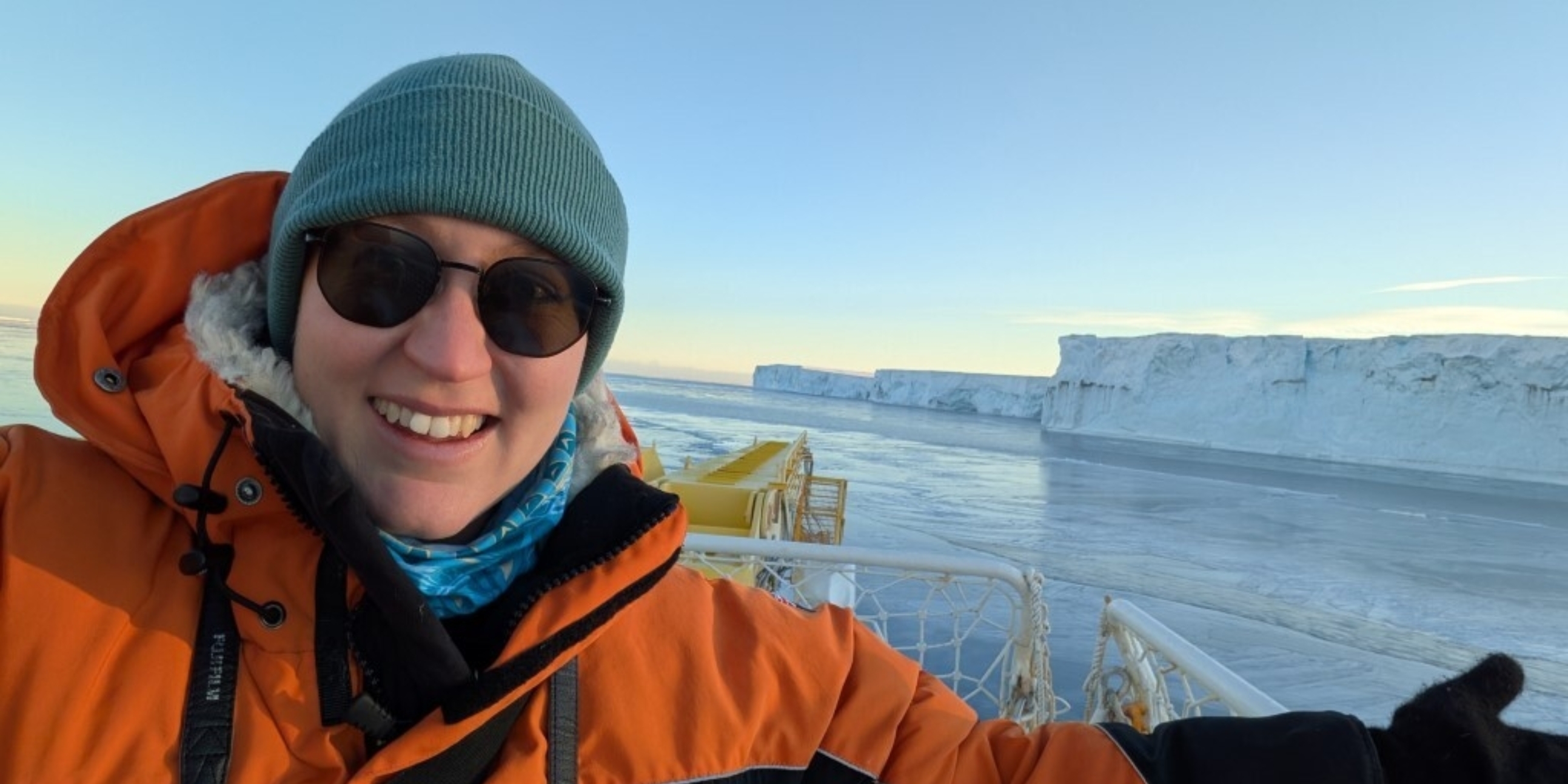
Selfie at Campbell Ice Tongue
Postcard from the edge: RV Aaron voyage report
Science never sleeps, and some researchers are still in the field as the Antarctic winter closes in. Dr Jasmin McInerney, an ocean instrument engineer, is doing collaborative work on the RV Aaron with Korea, US and UK groups. She is redeploying ASP moorings in the Terra Nova Bay (TNB) polynya, and working with the other teams on a few glider missions and moorings in several key places on the Ross Sea continental shelf and slope.
Marine observation networks are critical for the timely detection of approaching thresholds in the climate system. The Antarctic Science Platform is working towards the establishment of an internationally collaborative monitoring network for the Ross Sea region. Ocean measurements –like those being made by Jasmin and other scientists aboard the Aaron – essential for improving the models used to predict and project climate change in a +2°C world.
Jasmin has relayed a voyage report from the ship:
Kia ora koutou,
Another busy week on the Araon, punctuated by challenging ice and wind conditions - we are in a sea ice factory after all. Many mooring operations have happened, including Drygalski Ice Tongue - North (DIT-N).
The highlight for us has been the mooring operations. We came out of hiding in the corner of the Nansen Ice Shelf and the Drygalski Ice Tongue (deeper this week as another iceberg has calved off) during a katabatic wind. Our first stop was Hyun-A's (Seung-Tae Yoon's PhD student) FAST-S mooring in front of the Nansen. It was pretty special to see our long-time collaborators deploy a mooring of their own after helping us for so many years. Of course we helped with the instrument programming, a few missing bolts and a set of current-meters mounts from my spares box.
Next stop was an attempt to re-deploy Heavy Deep Lamont-Doherty Earth Observatory (LDEO) mooring we recovered last week. The ice closed in on us during the operation and we couldn't safely (to the deck or instruments) get the mooring all the way out, so we had to delicately bring the half of it that was out back on deck as the bridge carefully reversed towards the current-meter float stuck in the ice.
Because we wanted to end the day with a win we went over to Bottom 1 to see if the ice conditions were better there. They were good enough for the short mooring and we got it back in the water, just in time for sunset.
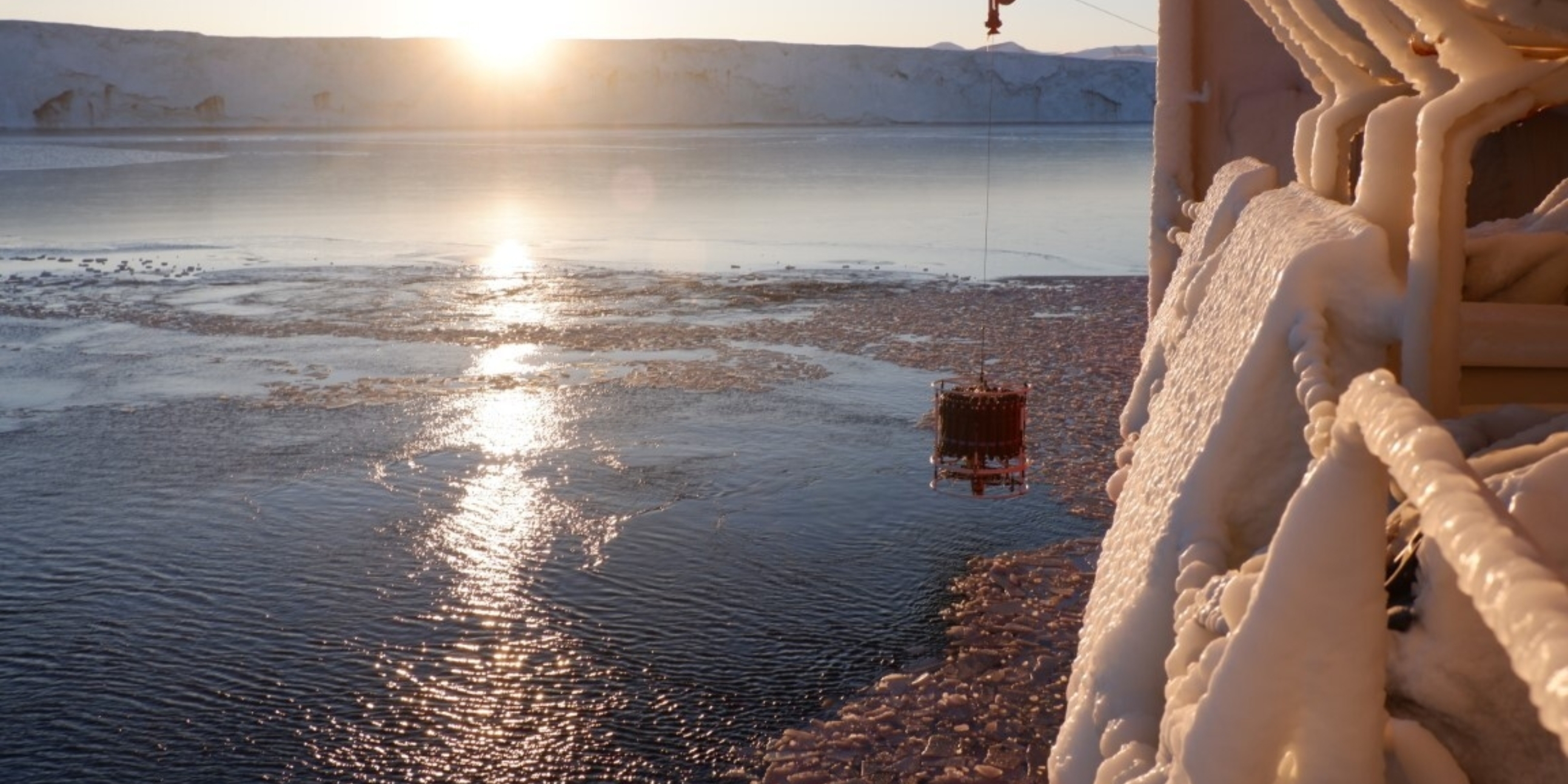
On Sunday we had DIT-N scheduled, the schedule changed a few times and in the afternoon, we arrived to ice free conditions, but marginal wind. After a lot of discussion, we decided that we would recover and then redeploy. The recovery was successful and a smooth operation. I pushed pretty hard to not leave and come back as I thought the weather was going to be tough on us and was closing in. In the end I won and we stayed. That was only possible with the volume of swap out gear I had and the number of hands. Carson (LDEO tech) turned around the two MicroCATs (a high‑accuracy conductivity, temperature sensor) we re-deployed with one from us and one from Korea Polar Research Institute (KOPRI) we have added to the mooring). And we got out the floats and lines. Unfortunately(?), the line we had spooled didn't come off the spool the way I was expecting, and we had marks for instruments in the wrong place. The weather meant we didn't have time to fix it so we improvised and got out all the instruments, the top and bottom will be in the same place, but the middle set will be a little higher in the water column. The silver lining is that the CTD casts show that this might actually have been a good move ... time will tell. All in the nick of time before the weather really got bad, and just in time for BBQ.
That was pretty much the last stop before heading back towards Jangbogo. We had an attempt to VMP overnight that was thwarted by ice even before we began. We had a consolation prize of an hydrographic transect along the Campbel ice tongue just by Jangbogo, where we did find a layer of melt water there, and the location was pretty spectacular.
Meahwhile, glider Feijoa has made several zig-zags across the Drygalski trough towards the shelf ... just now passing Mooring G. We're seeing mCDW and some very warm (above zero) water in the transects. Very exciting stuff.
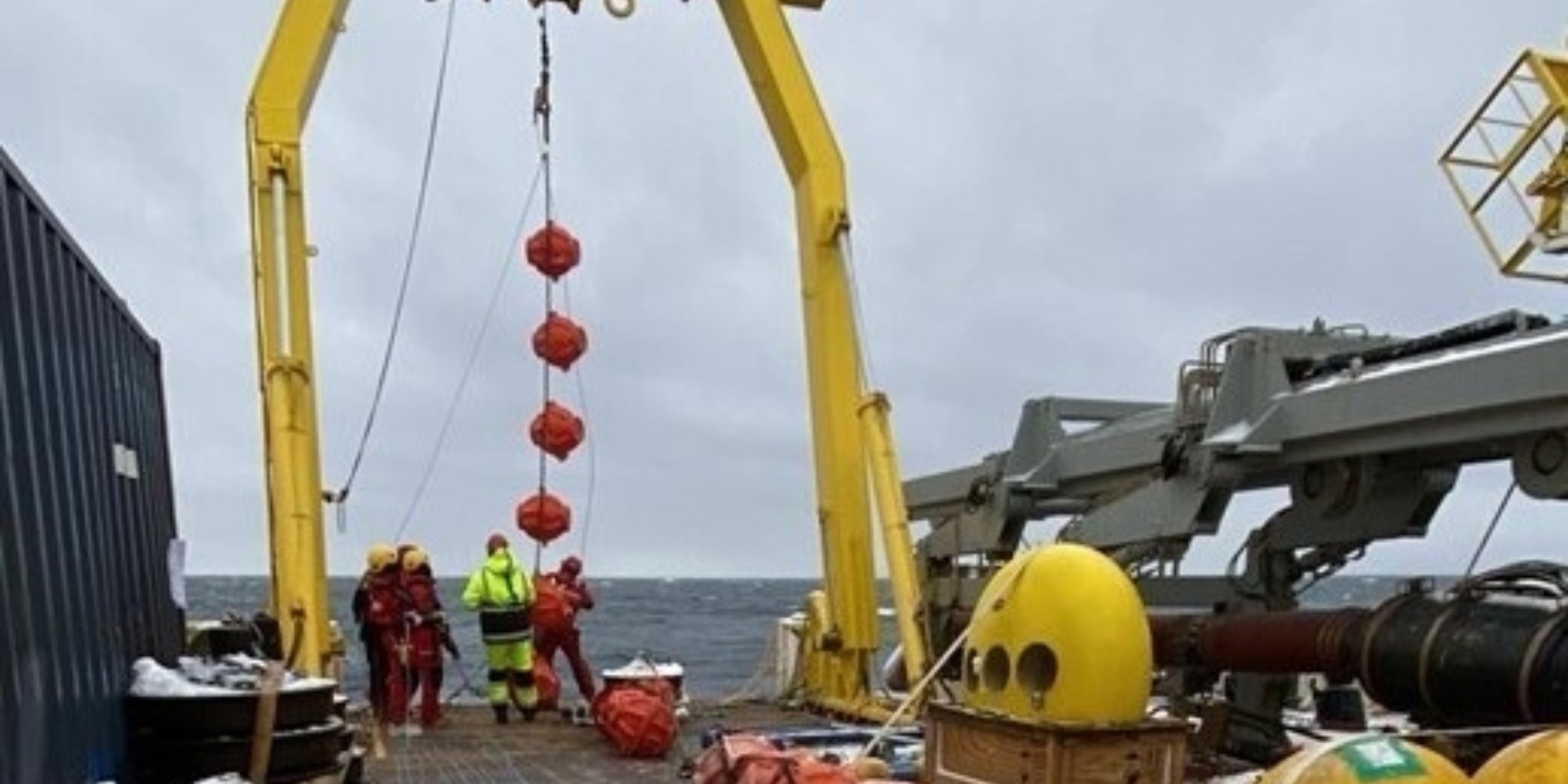
DIT-N deployment
We picked up the rest of the folk vacating Jangbogo for the winter and we're on our way north, still with a lot to do. The first order of business is to visit the remainder of the US LDEO moorings.
Busy times to come.
The ice is freezing.
Jasmin