
Evaluating the efficacy of the Ross Sea region MPA
Background
In 2016, a landmark decision was made by 25 nations to protect Antarctica’s Ross Sea by creating the world’s largest international marine sanctuary. The Ross Sea region Marine Protected Area (MPA) was set up to help conserve one of the most pristine oceans on the planet: in total, 1.55 million square kilometres of the Southern Ocean was protected, with fishing entirely banned in most of the area.
The Ross Sea is a high priority for protection because it still has all its top predators, intact trophic levels, and, to date, minimal damage done by people. The development of a commercial fishery for Antarctic toothfish in the region (1996), led by New Zealand, provided an extra impetus to establish the Marine Protected Area.
The Ross Sea is the most productive part of the Southern Ocean and is home to the world’s largest population of Antarctic toothfish, also known commercially as Chilean sea bass. A huge number of rare and unique species are present in the Ross Sea.
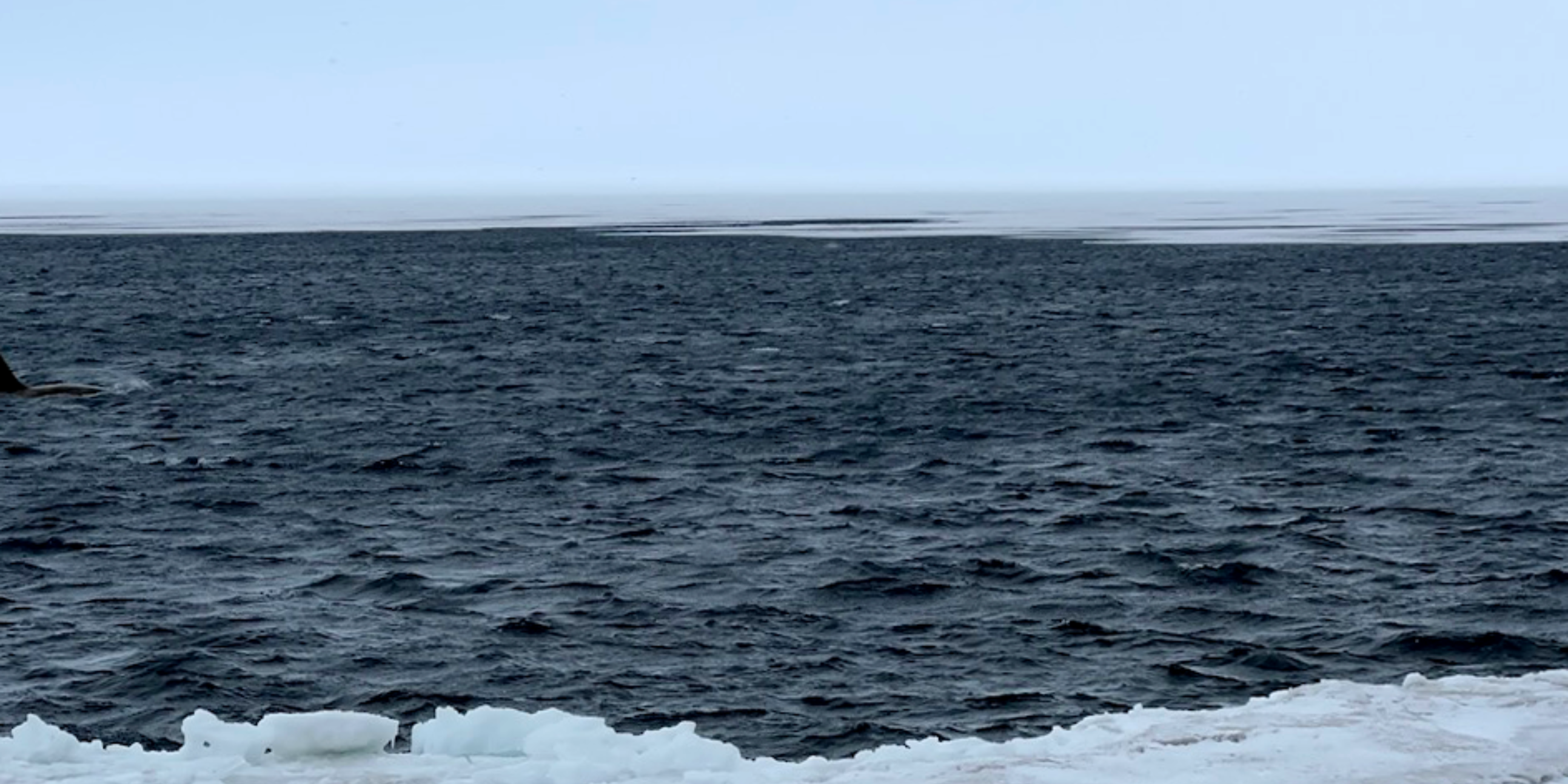
The MPA protects a third of the world’s Adélie and emperor penguins, more than 2,000 species of invertebrates and half the global population of Type-C killer whales. These are the smallest killer whale “ecotype” that are fish specialists, rather than feeding on seals or whales like most killer whales, and toothfish are one of their known prey species.
The international organisation responsible for conservation in the Southern Ocean, the Commission for the Conservation of Antarctic Marine Living Resources (CCAMLR), agreed to set up the Ross Sea region MPA for an initial 35 years, with a review every ten years to check that it is meeting its 11 conservation objectives.
The first 10-year review is due in 2027, and many parts of the review are being coordinated or led by teams from Aotearoa New Zealand, in conjunction with colleagues from USA, Italy, the Republic of Korea and many other countries. These reviews need to be informed by robust science to allow CCAMLR to make the best decisions for the region.
Investment for impact
During the first phase of the ASP (2018-2025) New Zealand researchers co-authored reports for the CCAMLR Working Group on Ecosystem Monitoring and Management, such as ‘A Technical Overview of the CCAMLR State of Antarctic Environment (SOAE) reporting’ (Deschepper et al. 2021) and ‘Update on CCAMLR State of Antarctic Environment (SOAE) reporting’ (Waluda et al. 2026).
A scientific paper submitted to CCAMLR, which was supported by the ASP, used satellite observations to provide an updated environmental characterisation of the Ross Sea continental slope (Pinkerton 2019). It showed the protected area here can be considered a reference area to understand the combined effects of climate change and fishing.
New Zealand also provided a summary of new information on biological, oceanographic and geomorphic processes in the Ross Sea area, focusing especially on trophically-dominant pelagic prey species such as krill and Antarctic silverfish (Pardo et al. 2026).
Phase 1 work supported the publication of eight studies which explored a range of topics, including changes in mesozooplankton community structure, which could affect ecosystem stability and management; foraging patterns of Weddell seals, which was found to be much more intensive than previously thought; and evidence of extensive macroalgal assemblages, which may contribute up to 2.8% of global macroalgal carbon fixation.
The ASP Phase 1 produced two impact summaries—Benthic Ecology and Pelagic Ecology—which are hosted on our website. While we do not have metrics for the individual pages, the landing page for our seven impact summaries received 808 views and had 373 active users from August 2025 to July 2026.
Now in Phase 2 (2026-2032), the ASP has dedicated $1.02 million over seven years to investigate the effects of the Ross Sea region MPA, both for the first decadal review and preparing for the second in 2037.
Named the ‘Protected Areas Hoe’, the work is focusing on translating technical scientific research into information that can be used by the international decision-makers of CCAMLR, to best manage fishing in the Ross Sea region and protect its unique and precious biodiversity.
References
Deschepper, P., C.M. Waluda, R.D. Cavanagh, C. Poirot, A. Barreau, P. Seguineau, Y. Le Bras, M. Eléaume, E. Pardo, S. Parker, C.A. Cárdenas and A.P. Van de Putte (2021). A Technical Overview of the CCAMLR State of Antarctic Environment (SOAE) reporting. CCAMLR document, WG-EMM-2026/21, CCAMLR, Hobart, Australia.
Pardo, E., Pinkerton, M., Lamping, S., Chung, S., Brooks, C., Hinke, J., Ghigliotti, L., Kim, J.-H., and Tuck, I. (2026). Review of environmental and ecological aspects of the Special Research Zone, part of the Ross Sea region Marine Protected Area. CCAMLR document, WG-EMM-2026/75, CCAMLR, Hobart, Australia.
Pinkerton, M. (2019). Change in environmental conditions of the Southern Ocean observed by satellites and data-assimilating models between 1981 and 2019. CCAMLR document, WG-EMM-2019/39, CCAMLR, Hobart, Australia.
Waluda, C.M., R.D. Cavanagh, S. Parker, C.A. Cárdenas, J. Hinke, P. Deschepper, F. Santa Cruz, A.P. Van de Putte, E. Pardo, S.E. Thorpe, S.M. Grant, A.H. Fleming, S.L. Hill, A. Barreau, L. Eon, Y. Le Bras, C. Royaux, P. Seguineau, M. Eléaume and M.A. Collins (2026). Update on CCAMLR State of Antarctic Environment (SOAE) reporting. CCAMLR document, WG-EMM-2026/88, CCAMLR, Hobart, Australia.