
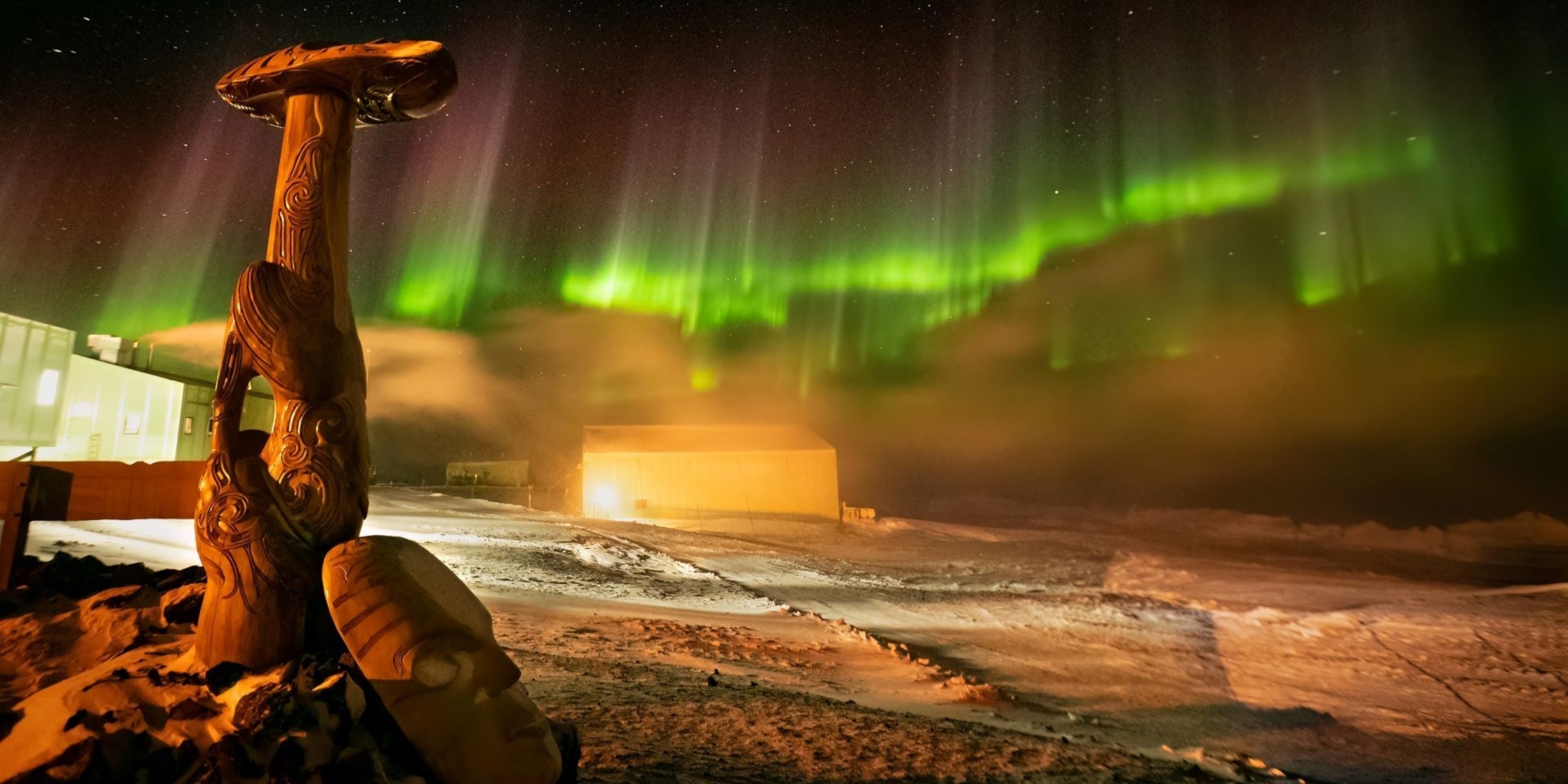
Mātauranga Māori in Antarctica
The ASP is charged with enhancing Antarctic and Southern Ocean research through the inclusion of mātauranga and tikanga Māori.
Iwi have long had relationships with the Southern and Antarctic Oceans. Ngāti Rārua and Te Ātiawa history tells of Hui te Rangiora setting sail from Rarotonga, following the migration of tohorā, when strong currents took him to the Southern Ocean. Ngāi Tahu also tell the story of Tamarereti, who ventured into the deep Southern Ocean with over 70 leaders and tohunga in search of Aurora Australis.
As a living, evolving knowledge system, taking mātauranga Māori to Antarctica empowers tangata Māori to investigate how it functions when removed from Aotearoa, how it might evolve in response to new lands and what effect this could have on the knowledge holders themselves.
Since the Ross Dependency was claimed by Aotearoa New Zealand it is also subject to Te Tiriti o Waitangi – meaning all New Zealanders have a legal obligation to enact Te Tiriti (the treaty) while ‘on the ice’.
Investment in culture
Investment in Vision Mātauranga began in Phase 1 (2018-2025) of the ASP with the appointment of a Kaiārahi Rangahau Māori (Māori research navigator), conference presentations, hui and outreach activities such as workshops and webinars. Our Kāhui Māori also gifted us the name Te Tūāpapa Pūtaiao o Aotearoa mō Te Tiri o Te Moana, as a translation for the Antarctic Science Platform. These all acted to lay the foundations for future Vision Mātauranga research.
In Phase 2 the ASP has set aside $2 million for the first four years of the Tipuranga: Mātauranga Māori Research Hoe, as well as $890,000 for the Vision Mātauranga mahi across the platform.
The ASP Kaiārahi Rangahau Māori has continued to deliver mMātauranga Māori workshops, which are upskilling researchers across the platform and beyond in how to operate in a culturally safe and competent manner.
The annual ‘Girls* on Ice’ Māori student scholarship has thus far supported one wāhine Māori to experience the inspiring and empowering experience of visiting Mount Ruapehu.Six more will be sponsored – one per annum for the lifetime of Phase 2.
The inaugural ‘Matariki Takeover’ of our monthly science newsletter in June 2026 featured our flagship mātauranga Māori research projects, along with associated news, and was opened by 1,170 people – 54% of all recipients, which is significantly above the industry average of 39.1%.
Sense of Place
The ‘Sense of Place’ event in 2025 aimed to build foundational knowledge of how the Māori culture connects to life and research in Antarctica. The team worked to ensure that all future Antarctic research under the ASP can be informed by, and responsive to, Māori perspectives of belonging, responsibility and care. While the Sense of Place team was visiting, other research teams reached out independently to ask for karakia.
Kaiārahi Rangahau Māori Delane Luke noted, “From waerea to takutaku, these karakia serve as the first steps toward understanding how we as Māori fit within this landscape, as we find our feet, our place, and our pūrakau here on the ice.”
The team blessed the site being prepared for the Scott Base rebuild, which involved a huge number of staff and was filmed by professional photographer Anthony Powell, for future reference and historical record.
The team also connected with kura kaupapa back in New Zealand during their visit, increasing the impact of their trip to a much wider community.
Kura hau awatea, kura hau pō, Southern Skies
In August 2025 the ASP supported Professor Rangi Matamua and his mentee, PhD student Mataia Keepa to travel to Antarctica. The aim of this event was to deepen understanding of mātauranga Māori by exploring the connection between Māori astronomical knowledge and the environment of Antarctica.
While in Antarctic the duo coined new terms for several things:
- Hukaroa: Antarctica. ‘Huka’ meaning ice &snow and ‘roa’ as a reference to Aotearoa.
- Tio-ā-tai and Tio Whatiwahti: Ice and snow assciated to the ocean. It is dangerous, slippery and it comes and goes with the seasons.
- Tio-ā-uta: Snow on the ice onshore.
- Tio Mauroa: Ice that melts based on the heat from the sun.
Rangi and Mataia gave an interview with Te Karere (1News) while they were at Scott Base, which has been watched more than 20,0000 times on Facebook alone. They were also accompanied by a documentary crew from Putiputi Productions, funded by Te Māngai Pāho, TVNZ and Radio New Zealand. While the premiere was in the 2026/2027 reporting year, the lead up to the release of the film created awareness of both Māori in Antarctica and the Matariki holiday, around which the film was scheduled to be released.