
Remote monitoring of Ross Ice Shelf melting
Antarctica might be hiding at the bottom of the globe, but changes there and in the surrounding ocean have ramifications around the world.
The Ross Ice Shelf (which sits on the water) currently holds back ice sheets (on the land) that have the potential to raise global sea levels by 12m if they melted in their entirety. Given that ice melts faster in water than in air, it is critical to monitor and be able to accurately predict the speed at which they are both moving into the ocean and/or melting.
Meltwater from ice shelves alone can influence ocean circulation, global sea levels, flooding, coastal erosion, habitat loss, and social and economic loss. So knowing how much meltwater there might be in the future allows policymakers to adapt accordingly.
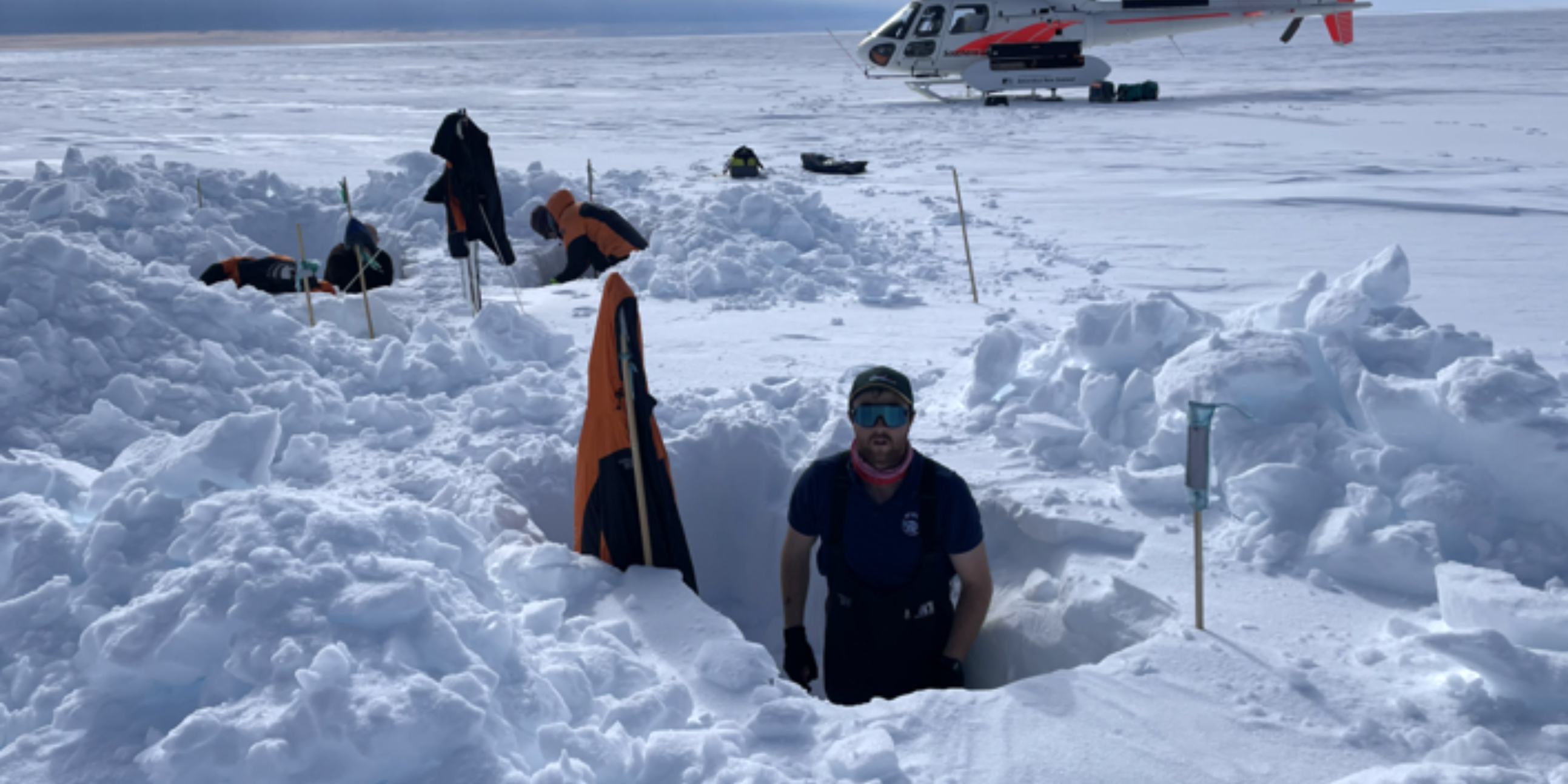
Ice shelf melt is measured using custom radar instruments called Autonomous phase Sensitive Radio Echo Sounders (ApRES). These radars provide hourly estimates of ice shelf thickness throughout the year, sending data back to New Zealand by satellite.
In 2022 the ASP joined with a Marsden Fast Start Grant to install 12 ApRES devices around the Ross Sea Region. Since then, ASP scientists have published five articles either directly involving ApRES data or using it to validate their results.
These include valuable findings regarding melt rates and basal reflectance across the Ross Ice Shelf, and the quantification of ice shelf melt and accretion, with a comparison of the two showing the former was “overwhelmingly larger”. Given the timeline of publishing, more articles are expected in the coming years that feature data from the 2022 ApRES equipment. These articles will assist in planning future research and inform relevant modelling projects.
Upgrading the network for better science
These ApRES monitoring stations are becoming increasingly difficult to support, both because of limited resources, such as aircraft being available to fly to the stations, and funding to replace parts of the devices.
To increase efficiency and impact, the ASP has invested $16,341 plus staff hours to upgrade the technology of current ApRES devices, as well as identifying which stations are able to be discontinued.
The concept is to get as good, or better, data, more efficiently, at a lower cost, with a lower carbon footprint.
Upgrading the hardware and cables has thus far reduced the chance of damage by extreme weather and saved up to three man hours and one helicopter hour at each site when the equipment has to be serviced. The new hardware is also transmitting reliable melt rates of the ice in near-real time – an incredibly useful improvement for researchers using these data.
Future upgrades are planned to increase the gap between trips to service the equipment – reducing helicopter and airplane trips. If successful, this could halve the ongoing servicing costs of the installations. It will also reduce the carbon footprint, which supports environmental policies of Antarctica New Zealand.